Services

Lawn sprinkler repair in The Heights Houston Texas, TX

Heads, valves, controllers, leaks, backflow, freeze prep. Phone (555) 010-4101.

Older PVC, big trees, and small lots. We fix heads, valves, and controllers without tearing up the landscaping.

This page is the full residential repair menu for lawn sprinkler systems in The Heights, Texas. We work heads, nozzles, valves, solenoids, controllers, low-voltage wiring, leaks, backflow assemblies, and freeze prep. Phone sitewide: (555) 010-4101. Prefer a form? Schedule a visit.

Start with the symptom, not the catalog

Dead zone with no sound at the box often points to power, wiring, or a solenoid. Zone that will not shut off points at a diaphragm or debris on the seat. Dry corner with wet sidewalk is usually heads and arcs. Soft ground and a spinning meter is leak territory. Blank clock is power path first. Matching the symptom to the right fix is how you avoid replacing a whole controller for a single bad coil — or trenching for “roots” when the rain sensor is stuck closed.

How we work on every ticket

  1. Controller and settings — stations fire, rain sensor state, seasonal adjust, obvious program mistakes.
  2. Valve box — solenoids, diaphragms, wet manifolds, bad splices.
  3. Heads with water on — throw, height, arcs, sunken cans, clogged screens.
  4. Dig only if the lateral is the problem — isolate first, especially under trees and hardscape.

That order keeps small lots cleaner and keeps the work tied to the actual failure. We replace what is shot. We do not default to full-system replacement because one station failed.

What “residential lawn irrigation” includes here

Spray and rotor zones on turf and light beds. Manifolds in plastic boxes. Controllers in garages or exterior panels. Above-ground residential backflows. We are not a commercial athletic-field shop and we are not a landscape design firm selling hardscape. If your issue is a broken head row, a weeping valve, a blank Rain Bird or Hunter panel, or a meter that will not sit still, you are in the right place.

Service cards below

Each card has a photo of real work and a long write-up: what fails, how we diagnose, when it is not that part, and how it ties to other pages. Jump links:

Areas and next reads

Primary city for this site is The Heights. Full nearby list: service areas. Straight answers: FAQ. Longer guides: blog. Who we are: about.

Call (555) 010-4101 when nothing is watering in the heat, when water is wasting, or when you want a diagnostic before the lawn seasons off permanently.

What we fix

Service breakdown

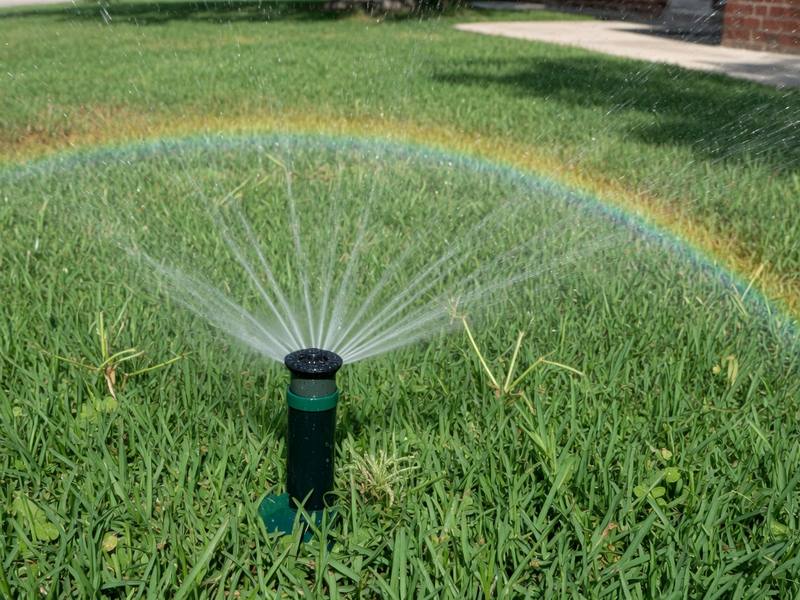
Sprinkler heads & nozzles in The Heights Houston Texas

Sprinkler heads & nozzles

Broken heads, clogged nozzles, wrong arcs, sunken cans, weak throw.

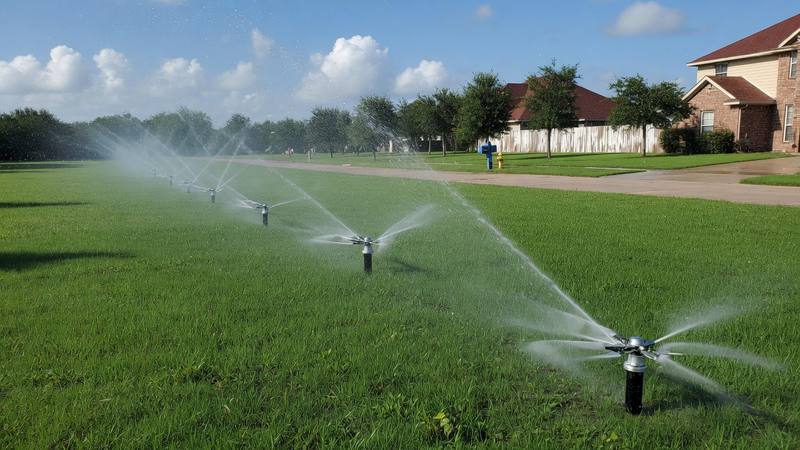
Sprinkler heads take more abuse than any other part of a residential system in The Heights Houston Texas. Mowers clip risers, soil builds up until cans sit below grade, kids and dogs kick plastic, freeze nights crack fittings, and partial remodels leave mismatched nozzles that never quite match pressure or arc. When a lawn looks striped, dry in corners, or permanently wet at the sidewalk, the first place we look is the spray and rotor hardware — then we decide whether the problem is really a head or something upstream.

What “head repair” actually covers

A good head visit is more than swapping a broken can. We run every zone with water on, walk the pattern, and mark what failed. Common fixes in The Heights Houston Texas yards:

  • Broken or missing spray and rotor heads (including pop-up risers snapped at the threads)
  • Clogged nozzle screens after a line break or dirty main flush
  • Wrong arcs watering sidewalks, driveways, fences, and tree trunks
  • Low throw from mismatched nozzles, weak pressure, or half-buried cans
  • Swing joints that snapped, pulled out of grade, or were never installed (hard pipe to head)
  • Rotor stalls, stripped gears, and spray nozzles that mist instead of sheet water
  • Sunken heads under thick St. Augustine or Bermuda that never clear the canopy

How a typical head visit goes

We start at the controller only long enough to confirm stations fire. Then we open valve boxes if a zone is dead entirely — no point swapping nozzles on a zone that never pressurizes. With water on, we watch throw distance, height above the grass line, and whether adjacent heads overlap the way the layout intended. Sunken cans get raised or replaced with the correct body height. Misaligned arcs get set so sidewalks stop growing algae and trunks stop rotting from constant spray.

If pressure is soft across a whole zone, we do not keep catalog-swapping nozzles. Soft pressure is a valve, main, or lateral story more often than a “buy a better nozzle” story. See valve repair and leak detection when the symptom is bigger than one head.

When it is more than a head

A dry strip under mature trees often means a crushed lateral, not a cheap nozzle. Far heads starve while near heads look fine. People lengthen runtimes and still get a brown band. We isolate first: shut other zones, watch the weak line, and pressure-test before we trench. Partial crushes are sneakier than full breaks — the yard still “waters,” just not where you need it.

Hardscape edges, brick borders, and new beds also hide geometry problems. A head that used to clear open lawn now sprays into a hedge. That is not always a new part — sometimes it is a trim, a riser extension, or a different nozzle family. We explain the options before we invent scope.

Coverage geometry on Texas clay

Clay common around The Heights Houston Texas does not forgive misting. Fine spray that looks pretty evaporates or runs off. Correct head height, matched precipitation rates, and cycle-and-soak scheduling matter more here than in sandy soil. After mechanical work we will often leave a starting schedule so you are not guessing minutes — you still own rain delays and common sense. Deeper schedule notes live on the blog and the short answers are in the FAQ.

What we need from you

Which zones look wrong, whether the problem is new or slow, and whether anyone dug recently (fence posts, tree work, French drains). Photos of dry strips help. Gate open and controller accessible speeds the visit. Book through schedule or call (555) 010-4101.

Head and nozzle repair is the most common ticket we run in The Heights Houston Texas. Catching sunken cans and blocked arcs before peak heat is how you keep the lawn from writing off a whole season. Call (555) 010-4101 when the pattern is wrong, not just when a head is lying on the sidewalk.
Valves & solenoids in The Heights Houston Texas

Valves & solenoids

Zone won’t open, won’t close, hums at the box, or floods the manifold.

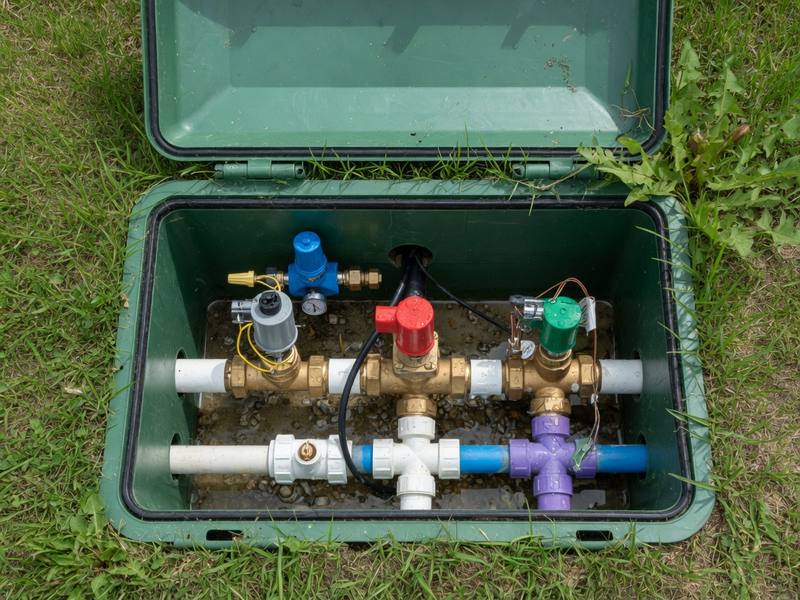
If a zone will not open, will not shut off, or hums at the box, the valve is usually the story. On The Heights Houston Texas lots the box is often half buried under mulch, soil, or thatch. We open it, pump standing water if needed, and test before we replace parts at random. A flooded box is a clue, not a decoration — constant moisture corrodes wire nuts, sticks solenoids, and hides manifold weeps that drive the water bill.

Common valve problems we see

  • Failed solenoid coil (zone never opens; sometimes a faint buzz at the box)
  • Torn or debris-packed diaphragm (zone will not close, or only closes with manual bleed fiddling)
  • Weeping manifold fittings filling the box while the system is “off”
  • Wiring open, shorted, or corroded in a wet box
  • Stuck bleed screws and seized manual actuators after years of grit
  • Mixed brands on one manifold after partial past repairs — we match what works, not what is trendy

Diagnosis order

Controller station output → voltage at the valve → mechanical rebuild or solenoid swap. That order stops you from replacing a whole clock when a single solenoid is open, and stops us from tearing into a diaphragm when the station never left the panel. Related paths: controllers & wiring and FAQ.

We check ohms on the coil when the story is intermittent. Heat, wet splices, and nicked low-voltage wire all mimic “bad valves.” Field wiring is part of valve work even when the plastic body looks fine.

Why valves fail more on older The Heights Houston Texas systems

Many residential systems here were added years after the house. Boxes sit low, lids sink, and irrigation water sits in the can after every cycle. Debris from a past main break packs the diaphragm seat. Freeze events crack above-ground hardware and send grit downstream. None of that means you need a whole new system — it means we rebuild or replace the failed station and clean the environment so the next part lasts.

What a solid valve fix looks like

Zone opens and closes cleanly. Box is as dry as the design allows. Wire splices are waterproof, not open nuts in soup. Lid sits flush so mowers and ankles survive. Labels get a note if stations were mystery wires when we arrived. If multiple valves look tired, we prioritize the one actively wasting water, then plan the rest — same triage as a high bill call under leak detection.

When we recommend more than one valve

If three stations share a rotting manifold and every diaphragm is original from a twenty-year-old install, phased replacement can be smarter than one heroic rebuild. We explain what failed and what can wait. We do not default to “replace the whole irrigation system” when one solenoid is open.

Call (555) 010-4101 for valve and solenoid work in The Heights Houston Texas. Or request a visit. Bring the symptom: never opens, never closes, or only zone X floods the bed — those three phrases route the truck correctly.

Controllers & wiring in The Heights Houston Texas

Controllers & wiring

Blank screens, dead stations, bad programs, rain-sensor quirks.

Blank displays, dead stations, programs that never start, and clocks that “worked until the storm” are controller tickets. In The Heights Houston Texas clocks often live in garages on cheap transformers, shared outlets, and the occasional GFCI that trips when the freezer kicks on. Power path first — then board, then field wiring. Smart upgrades only after the hydraulics and low-voltage path make sense.

What we check on every controller call

  • Outlet, GFCI, transformer, and fuse or internal power supply
  • Rain sensor, soil sensor, and seasonal adjust left at odd values
  • Station voltage at the panel and ohms out to the valve
  • Common wire integrity (one bad common can look like half the yard died)
  • Whether a smart Wi-Fi upgrade is worth it after heads and valves work
  • Miswired stations from a past DIY swap — zone 3 opens bed 6, etc.

Smart controllers are not magic

A Wi-Fi clock helps people who will use weather features and remote tweaks. It does not fix broken heads, open valves, or crushed laterals. We fix the system, then talk clocks. If you already own a smart unit that will not connect, we still start with power and field ohms — app errors are often symptoms of dead stations, not dead cloud accounts.

After any replacement we run each zone once and confirm the valve you expect is the valve that opens. Labeling is part of the job. Future you will not remember which pink wire is zone four.

Programs that match real lawns

Shade, clay, and small lots around The Heights Houston Texas need shorter sprays, possible cycle-and-soak, and seasonal adjust — not a single 40-minute blast every morning regardless of rain. We set something sane after hardware works. You still own rain delays and shutting off for freezes. Pair controller work with head coverage so geometry and minutes match.

Wiring and the “one dead station” case

A healthy clock with a single dead station is often a field problem: cut wire at a bed, open splice in a wet box, or a solenoid coil that failed open. We test so we are not replacing clocks for wire faults. Multiple random dead stations can still be a board — we prove it with voltage, not vibes.

Full menu: all services. Book: schedule. Phone: (555) 010-4101 for controller and wiring work in The Heights Houston Texas.

Leak detection & line repair in The Heights Houston Texas

Leak detection & line repair

Wet spots, hissing, spinning meters, sudden water-bill spikes.

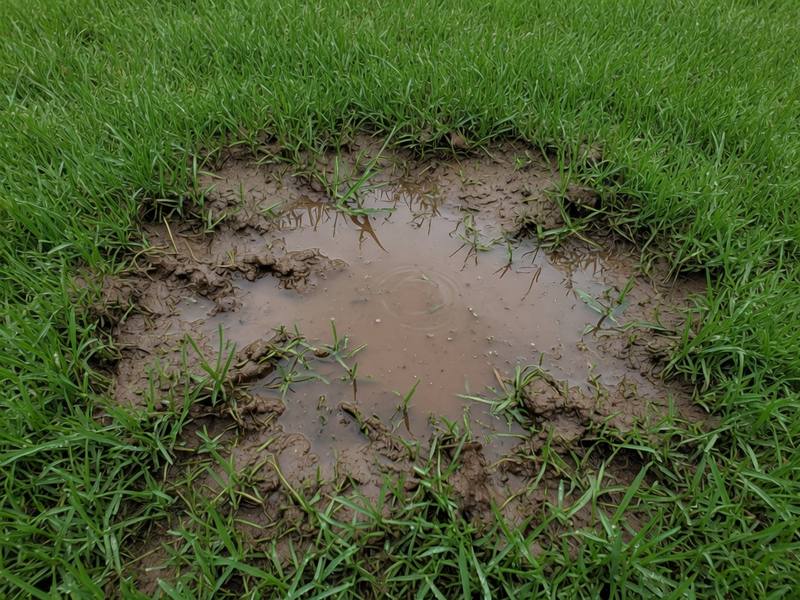
Soft ground, hissing under mulch, green stripes in weird places, or a meter that turns with everything “off” — that is leak work. Houston-area clay and the soils around The Heights Houston Texas hide the true joint; water travels along old trench lines and surfaces at a low spot far from the break. We isolate zones and pressure-test instead of trenching on a guess.

Leak types we diagnose

  • Lateral breaks (often under trees — roots crush and shear pipe)
  • Mainline weeps between the backflow and the first valves
  • Valves that will not seat and dump into the box or a bed
  • Backflow body cracks after freezes
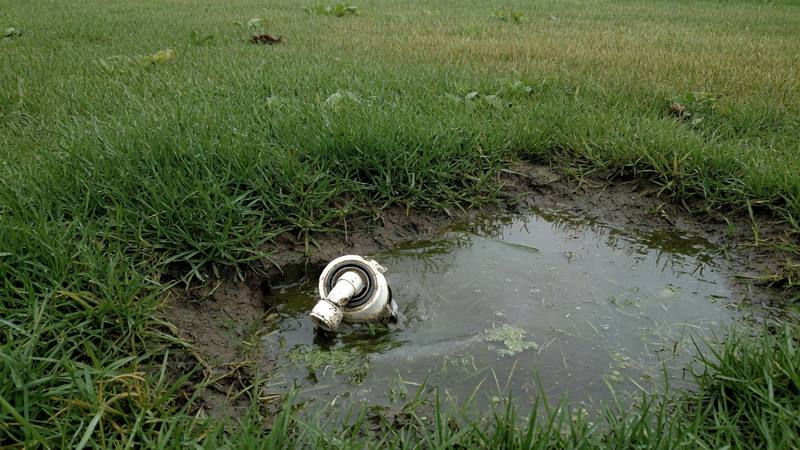
  • Swing-joint and head-base leaks that soft-spot a circle of turf
  • Poor past repairs (hose clamps, wrong primer, mixed pipe sizes)

How isolation beats guessing

Active geysers: shut the irrigation supply first, then call. For sneaky high bills, we use the meter, zone shutoffs, and valve-box inspection. A spinning meter with indoor fixtures off is the cleanest proof of an irrigation path. A high bill with a still meter can still be irrigation if programs ran longer than you think — we check both stories before we dig.

Soft ground mapping after a cycle helps, but clay lies. That is why we do not open a ten-foot trench on the first wet spot. Related: backflow, valves, and areas we cover.

Roots, trees, and partial crushes

A fully severed lateral is obvious: no water past the break. A partial crush is sneakier. Heads near the valve look fine; far heads starve. People lengthen runtimes and still get a dry band. We look for that pattern before we blame nozzles. After a repair we flush so grit from the cut does not pack the next nozzle screen — a detail that separates a one-visit fix from a callback.

Reroutes are short on purpose. Moving a few feet of pipe away from a root mat can beat stacking couplings in the same trench the tree will reclaim. We expand scope only when the line is a repeat offender.

What a good leak outcome looks like

Meter settles. Zones shut down cleanly. No permanent soft spots. Bill trend improves over the next billing cycle unless indoor use also changed. We will not promise a utility refund; we will promise the irrigation side is not the leak anymore.

(555) 010-4101 — leak checks and line repair in The Heights Houston Texas. Prefer forms? Schedule a visit. Emergency spraying: shut irrigation water at the backflow or house side, then call.

Backflow testing & repair in The Heights Houston Texas

Backflow testing & repair

Residential device testing, freeze cracks, and common rebuilds.

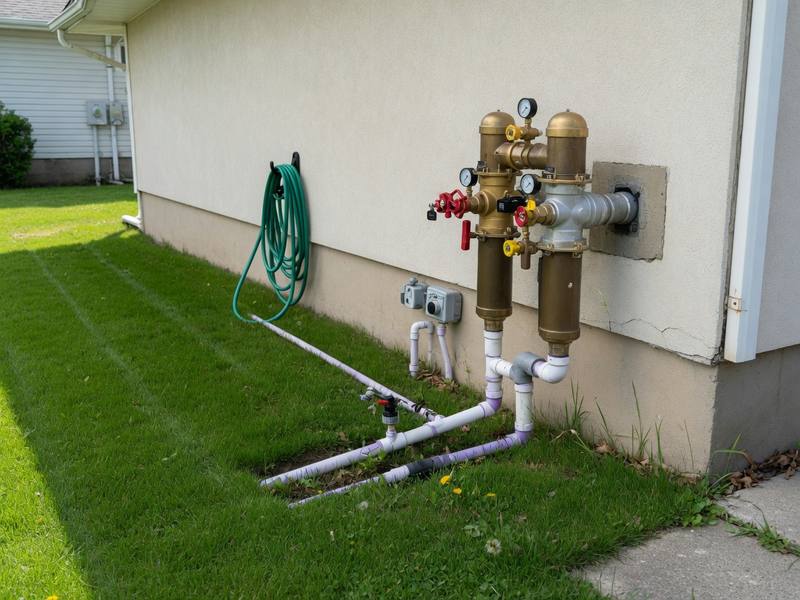
Above-ground backflow assemblies protect drinking water and take freeze damage hard. In The Heights Houston Texas they often sit on the side of the house with little cover, full sun in summer, and cold exposure when a rare hard freeze hits. We test residential devices, repair common failures, and help with the mechanical side of compliance your utility expects.

When to call about backflow

  • Device spraying, dripping from test cocks, or cracked after a cold night
  • Notice from the water provider that testing is due
  • Side-yard flooding near the assembly while the system is idle
  • You shut the irrigation supply and the wet spot stops (points at pressurized irrigation hardware)
  • After landscaping crews moved soil or hit the assembly with equipment

Testing vs repair

Testing checks whether the assembly still protects the potable side under the conditions the standard requires. Repair is the mechanical work when a check, spring, or body fails. Freeze cracks on plastic and brass are common enough that we treat post-freeze inspection as a real service ticket, not a luxury. Do not run a cracked body “until the weekend.” Shut irrigation water and book a visit.

Related winter path: freeze prep & recovery. Related underground path if the assembly is fine but the yard is soft: leak detection.

What we need for a clean visit

Clear access to the device, knowledge of where your irrigation shutoff is, and any notice letter from the utility if this is a compliance test. If the assembly is buried in shrubs, we will still work — but five minutes of access clearing helps. After repair, we re-test when the job requires it and explain what failed in plain language.

Why backflow matters beyond the ticket

A failed assembly is not only a code story. It is a cross-connection risk and often a water-waste risk when the body cracks under pressure. Side-yard mud next to a slab is how small freezes become foundation headaches. Fix early.

Call (555) 010-4101 for backflow testing and repair in The Heights Houston Texas. More area context: service areas. Questions: FAQ.

Freeze prep & recovery in The Heights Houston Texas

Freeze prep & recovery

Wraps, shutoffs, blow-outs when the forecast earns them, post-freeze checks.

Texas freezes are short and mean. Exposed backflows crack; wet valve boxes and shallow lines can suffer too. Freeze prep for The Heights Houston Texas is not a northern full winterization speech — it is wrapping, knowing your shutoff, insulating what is exposed, and blow-outs when the forecast earns them. After a freeze, inspect before the next automatic cycle so you are not pumping water through a cracked body into the side yard.

Practical freeze prep we handle

  • Insulating covers and wraps on above-ground assemblies
  • Confirming irrigation shutoff locations so you are not searching at midnight
  • Blow-outs when temperatures and system design justify them
  • Controller guidance: rain off, seasonal adjust, or full off during the event
  • Post-freeze inspection of backflows, valve boxes, and obvious wet spots

After the cold snap

Walk the backflow first. Cracked brass or plastic under pressure can undermine soil near slabs and walks. Shut irrigation water off, then book backflow repair. Controllers that die after a surge are a separate path — controller work — and should not be confused with hydraulic freeze damage.

Soft spots that appear only after the first post-freeze run may be new lateral stress or fittings that failed under ice. We isolate; we do not trench the whole front yard on day one.

What freeze prep is not

It is not a sales pitch for a brand-new system every November. It is not ignoring the device all winter in a climate that still freezes hard every few years. Simple foam covers beat flooded side yards. Knowing your shutoff beats panic. Read more local notes on the blog and FAQ.

Call (555) 010-4101 for freeze prep and recovery in The Heights Houston Texas. Or use contact / schedule. When the forecast shows hard freeze, earlier prep beats cleaning up a cracked device later.

Book a diagnostic

The Heights Houston Texas · (555) 010-4101

(555) 010-4101 Schedule